


Joint Support Duo
Pro Glucosamine Blend + Pro Collagen Peptides
What it will do
Help is at hand for knees that feel stiff, sore or unpredictable. Supports progressive healing of the tissues inside and around the joints, so you feel steady on your feet again and move more easily.
What’s in it
A unique blend of 19 nutrients that work together for the continuous maintenance of joint tissues including glucosamine, chondroitin, collagen, hyaluronic acid, traditional botanicals and essential vitamins and minerals.
How it works
Glucosamine, chondroitin, hyaluronic acid and MSM regenerate and hydrate cartilage to lubricate joints and absorb impact. Collagen peptides and vitamin C maintain the tendons, ligaments and connective tissue that bind joints in place, so movement feels controlled and steady again. Turmeric and boswellia prevent swelling and stiffness when taken long term.
Why choose Swallow
Expert-formulated by nutritionists, using clinically relevant doses of complementary ingredients, and designed as a focused joint support protocol for long-term comfort and mobility.


Pro Glucosamine Blend - Serving Size: 3 Capsules
Servings Per Container: 30
Pro Collagen Peptides - Serving Size: 2 Capsules
Servings Per Container: 30
| Amount Per Serving | *NRV | |
| Glucosamine | 1000 mg | ** |
| Chondroitin | 400 mg | ** |
| Vitamin C | 60 mg | 75% |
| MSM | 100 mg | ** |
|
Turmeric Root Extract 50:1, Equivalent to providing Curcuminoids: |
|
** |
| Boswellia Extract providing Boswellic Acid | 50 mg | ** |
| Hyaluronic Acid | 25 mg | ** |
| Vitamin D3 | 5 ug | 100% |
| Marine Collagen | 1000 mg | ** |
| Hyaluronic Acid | 100 mg | ** |
| Vitamin C | 60 mg | 75% |
| Coenzyme Q10 | 50 mg | ** |
| Vitamin B3 | 15 mg | 94% |
| Zinc | 5 mg | 50% |
| Vitamin E | 11 mg a-TE | 92% |
| Lactobacillus Acidophilus | 2.5B CFU | ** |
| Iodine | 66 µg | 44% |
| Vitamin B2 | 4 mg | 286% |
| Copper | 500 µg | 50% |
| Selenium | 16 µg | 29% |
| D-Biotin | 50 µg | 100% |
*NRV = Nutrient Reference Value
** = No NRV Established
Pro Glucosamine Blend Ingredients:
Glucosamine Sulphate 2KCL (Crustaceans), Chondroitin Sulphate, Vegetable Capsule Shell (HydroxyPropylMethylCellulose), MSM (Methylsulfonylmethane), Vitamin-C (PureWay-C®), Boswellia Serrata Extract (65% Boswellic Acid), Rice Extract Blend, Hyaluronic Acid (Sodium Hyaluronate), Vitamin D3 (Cholecalciferol), Turmeric Root Extract Powder (95% Curcuminoids).
For allergens see ingredients in bold
Pro Collagen Peptides Ingredients:
Hydrolysed Marine Collagen (Fish), Vegetable Capsule Shell (HydroxyPropylMethylCellulose), Hyaluronic Acid (Sodium Hyaluronate), Vitamin-C (PureWay-C®),CoenzymeQ10(ubiquinone), Rice Extract Blend, Nicotinamide (Vitamin B3), Zinc Citrate, Vitamin E, (D-Alpha Tocopheryl Succinate), Lactobacillus, Acidophilus, Iodine from Kelp (Bladderwrack) Extract (35:1), Riboflavin (Vitamin B2), Copper Gluconate, Selenium (Sodium Selenite), D-Biotin (Vitamin B7).
For allergens see ingredients in bold
Natural help for knees and hips
Designed by our nutritionists to help you move with confidence and keep doing the things you love.
2 supplements with 19 ingredients for healthy, flexible and strong joint tissues.
Swallow Pro Glucosamine Blend targets joint-cushioning cartilage while our Pro Collagen Peptides reinforce the tendons and connective tissues that tether joints together and keep movements guided and controlled.
Stronger joints, easier movement
- Complete nutrition for stronger tissues inside and around your joints
- 1000 mg glucosamine and 400mg chondroitin to support cartilage cushioning and resilience
- 1000 mg collagen peptides help strengthen tendons, ligaments and connective tissue
- Turmeric and Boswellia are traditionally used botanicals to relieve stiff and swollen joints
- Vitamin C contributes to normal collagen formation for the normal function of cartilage and bones
- Vitamin D contributes to the maintenance of normal bones and muscle function
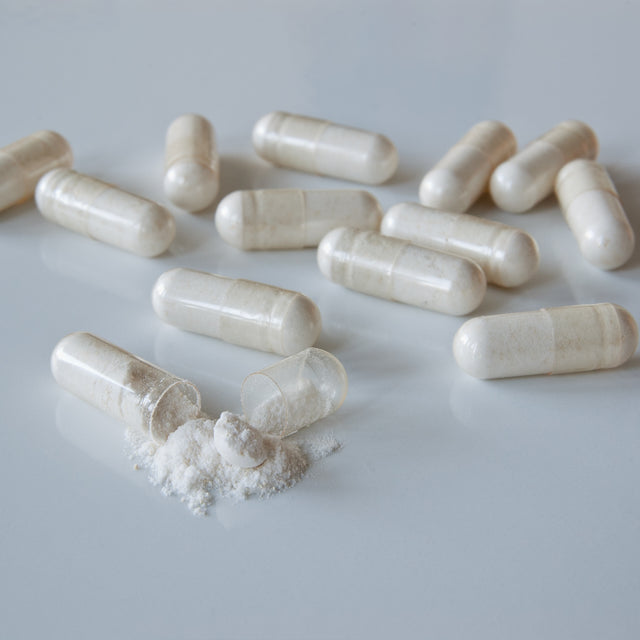
Optimally Formulated Nutraceuticals
Glucosamine & collagen complexes designed by nutritionists
The best absorbed glucosamine available
Glucosamine, Chondroitin, MSM and Hyaluronic Acid! We haven’t just united the fab four - we also sourced the best absorbed, most effective form of each one.
Collagen for joint structure
Amino acids from marine collagen with superior Pureway vitamin C give your joints the building blocks for healthier cartilage, tendons and ligaments.
Natural & additive-free
This clean supplement contains nothing artificial - support your joints and bones naturally.
Frequently Asked Questions about Glucosamine and Collagen for Joints
Taking collagen and glucosamine blends together supports joint health by addressing different but interconnected components of the joint system. Glucosamine and chondroitin primarily support the cartilage matrix inside the joint, which acts as a shock absorber and load-bearing surface. They are involved in the production and maintenance of glycosaminoglycans and proteoglycans, compounds that give cartilage its ability to retain water and resist compression.
Collagen peptides, by contrast, support the wider connective tissue framework of the joint, including cartilage, tendons, ligaments and the joint capsule. Collagen is the main structural protein in these tissues, providing tensile strength and mechanical stability. When used together, glucosamine supports the cushioning and hydration of cartilage, while collagen peptides support the structural integrity of the tissues that hold the joint together, offering a more complete, system-level approach to joint support.
Glucosamine is a naturally occurring amino sugar found in cartilage and synovial fluid (the liquid lubricant inside our joints). It is used by the body as a precursor for glycosaminoglycans and proteoglycans, which are essential components of the cartilage extracellular matrix. These compounds help cartilage retain water, giving it elasticity and enabling it to absorb mechanical stress during movement.
As cartilage has a limited ability to regenerate, maintaining the availability of its building blocks is important for long-term joint health. Supplemental glucosamine supports the ongoing maintenance of cartilage structure by providing raw materials involved in cartilage turnover, particularly in joints exposed to repeated load or age-related wear.
Chondroitin sulphate is one of the primary structural molecules within cartilage. It binds water molecules within the cartilage matrix, helping maintain cartilage thickness, elasticity and resistance to compression. This water-binding capacity is essential for joint cushioning, particularly during weight-bearing activities such as walking or lifting.
In addition to its structural role, chondroitin contributes to the balance between cartilage breakdown and repair by influencing enzymes involved in cartilage metabolism. By supporting cartilage hydration and resilience, chondroitin helps maintain joint flexibility and supports the ability of joints to withstand repetitive mechanical stress over time.
Collagen peptides are hydrolysed into smaller fragments that are easily absorbed and used by the body as a source of specific amino acids, including glycine, proline and hydroxyproline. These amino acids are required for the synthesis and maintenance of collagen-rich tissues such as cartilage, tendons, ligaments and the joint capsule. Beyond serving as raw materials, collagen-derived peptides are thought to act as signalling molecules that stimulate collagen-producing cells involved in connective tissue maintenance. This supports the structural integrity, tensile strength and resilience of joint tissues, which is particularly important for maintaining stability and normal movement as joints are exposed to ongoing mechanical load.
Hyaluronic acid is a key component of synovial fluid, the viscous substance that lubricates joints and allows smooth, low-friction movement between cartilage surfaces. It also forms part of the cartilage matrix itself, where it helps organise and stabilise proteoglycan structures. Adequate hyaluronic acid levels support joint lubrication, shock absorption and overall joint comfort. Including hyaluronic acid alongside glucosamine, chondroitin and collagen supports both the internal lubrication of the joint and the hydration of cartilage, helping maintain efficient joint movement and mechanical protection over time.
Turmeric and boswellia provide bioactive plant compounds that influence inflammatory signalling pathways involved in joint discomfort. Curcuminoids from turmeric and boswellic acids from boswellia interact with enzymes and signalling molecules associated with the inflammatory response, including pathways involved in prostaglandin and leukotriene activity.
Rather than acting as painkillers, these extracts support inflammatory balance within joint tissues. This is relevant because chronic, low-grade inflammation can contribute to cartilage breakdown, joint stiffness and reduced mobility over time. By supporting a more regulated inflammatory environment, turmeric and boswellia help create conditions that support joint comfort and functional movement, particularly during regular activity or exercise.
Unlike pharmaceuticals, these benefits build up slowly over time and depend on taking the supplements every day - they are not effective as a one-off fix to stop sudden twangs or aches! They help the body rebalance itself naturally, rather then putting a chemical block on its natural inflammation processes.
Vitamin C is essential for normal collagen synthesis. It acts as a cofactor for enzymes involved in the hydroxylation of the amino acids proline and lysine, a critical step in forming stable collagen fibres. Without sufficient vitamin C, newly formed collagen is weaker and less structurally sound.
In joints, collagen is a major component of cartilage, tendons, ligaments and the joint capsule. By supporting normal collagen formation, vitamin C contributes to the maintenance and repair of these connective tissues. Its antioxidant activity also helps protect joint tissues from oxidative stress generated during mechanical load and physical movement.
Vitamin D contributes to the maintenance of normal bones and muscle function, both of which are essential for joint stability and load distribution. Adequate vitamin D status supports bone density and muscular coordination, reducing mechanical strain placed on joints during movement.
Zinc and copper play important roles in connective tissue maintenance and tissue turnover. Zinc is involved in normal protein synthesis and cell division, while copper contributes to the cross-linking of collagen and elastin fibres, a process required for connective tissue strength and resilience. Together, these nutrients support the ongoing repair and structural integrity of joint tissues.
Joint tissues such as cartilage and connective tissue have limited blood supply and renew slowly. As a result, benefits from nutritional joint support are gradual rather than immediate. Some people report changes in joint comfort or ease of movement within 4–8 weeks, particularly where inflammation-related stiffness is involved.
Structural support for cartilage and connective tissue typically requires much longer-term, consistent use. Timeframes of 8–12 weeks or more are commonly associated with changes related to cartilage hydration, connective tissue resilience and joint function, reflecting the natural turnover rates of these tissues.
It's important to know that the benefits continue building up and up over the next 18 months to 2 years of consistent daily supplementation.
Joint-supporting nutrients work by contributing to long-term tissue maintenance rather than producing short-term effects. Cartilage, tendons and ligaments rely on a steady supply of structural components and supporting nutrients over time. Irregular intake is less effective because it does not align with the slow renewal cycles of joint tissues. Consistent daily use helps maintain stable availability of amino acids, cartilage precursors and supportive micronutrients, allowing the body to integrate them into ongoing repair and maintenance processes. For joint health, regular intake over months is more important than the time of day supplements are taken.
We offer free delivery on all orders which takes 2-4 days. Express delivery is available for £3.95 and takes 1-2 days. For more information see our Shipping Policy
Collagen and Glucosamine Blend Ingredients
What's inside

Natural Marine Glucosamine Sulphate 2KCL
Glucosamine supports joint health by promoting the repair and maintenance of cartilage, which cushions joints and reduces friction during movement. Long-term use of glucosamine sulphate has been shown to slow the progression of knee osteoarthritis.

Chondroitin Sulphate
Chondroitin attracts water into cartilage, which helps to keep it hydrated and spongy, thus improving its shock-absorbing properties. It also inhibits enzymes that break down cartilage, supporting its repair and slowing the progression of joint degeneration.

MSM (Methylsulfonylmethane)
MSM works by providing sulphur, an essential building block for collagen and connective tissue, which helps repair and maintain healthy joints. It also has anti-inflammatory properties that reduce the production of certain molecules linked to pain and stiffness, thereby improving joint flexibility and reducing discomfort.

Hyaluronic Acid
If you want to improve mobility and reduce pain, there’s no better way to lubricate joints than by taking oral hyaluronic acid. It works by retaining moisture in the joints, acting as a lubricant and cushion, which helps to reduce friction and ease joint movement. It also removes waste products from joints, promoting overall joint function and comfort.

Marine Collagen Peptides
Renew the collagen tissues in your joints with all the right building blocks from natural marine collagen, hydrolysed so you can absorb more.

Pureway® Vitamin C
Vitamin C is vital for us to build collagen correctly. PureWay-C® is a proprietary, scientifically researched form of vitamin C that contains lipid metabolites and citrus bioflavonoids for better delivery, absorption and uptake.

Vitamin D3
Our 100% vegan vitamin D3 from algae boosts magnesium and calcium absorption - essential for healthy bones.





Backed by Science
Trusted, natural and safe
Don't just take our word for it
Nourish Awards
Swallow Pro Collagen Peptides
Winner in the Beauty and Collagen Category
“A clean, sustainably packaged collagen blend with supportive nutrients that reflects excellent quality and ethical sourcing — a thoughtful formulation promoting healthy skin and overall wellbeing.”
The Judges Panel

Nourish Awards
Swallow Pro Glucosamine Blend
Winner in the Targeted Health Solutions Category
“A well-formulated and ethically produced joint support blend combining proven ingredients for cartilage and connective tissue health, offering clean, effective support for active lifestyles.”
The Judges Panel

Nutritionist Review
“A key standout for this glucosamine and collagen protocol is the broad range of nutrients that help regenerate joint tissues, including cartilage, collagen and the membranes that keep joints supple, strong and well cushioned."
Shona Wilkinson - BSc (Hons), NTP, CNHC

Customer Review
The bees knees
"I was taking so many different supplements but this glucosamine blend has the whole lot in one. Saves money and a LOT less pills to gulp down so I'm a big fan. It makes a HUGE difference."
Dave D, Walsall

Customer Review
Definitely helping my knees
"Early days yet but I've noticed my knees are a lot less painful when going up and down stairs and my skin looks better already. I'm hoping it will help thicken my hair in time."
Mistry H, Hendon

Explore our products
Find your everyday essentials
Scientific Research on Glucosamine & Collagen
Long-term use of glucosamine sulphate has been shown to slow the progression of knee osteoarthritis.
Long-term effects of glucosamine sulphate on osteoarthritis progression: a randomised, placebo-controlled clinical trial, Reginster, J. Y., Deroisy, R., Rovati, L. C., et al. (2001), The Lancet, 357(9252), 251-256. doi:10.1016/S0140-6736(00)03610-2
There is now a large, convergent body of evidence that glucosamine sulfate, given at a daily oral dose of 1,500 mg, is able to significantly reduce the symptoms of osteoarthritis in the lower limbs. This dose of glucosamine sulfate has also been shown, in two independent studies, to prevent the joint space narrowing observed at the femorotibial compartment in patients with mild-to-moderate knee osteoarthritis. This effect also translated into a 50 % reduction in the incidence of osteoarthritis-related surgery of the lower limbs during a 5-year period following the withdrawal of the treatment.
Role of glucosamine in the treatment for osteoarthritis, Jean-Yves Reginster, Audrey Neuprez, Marie-Paule Lecart, Nathalie Sarlet & Olivier Bruyere
Discomfort in joints is caused by local destruction and inflammation of the joint(s), and the acute phase of discomfort often becomes a chronic state and may progress to more severe diseases, such as osteoarthritis (OA) and rheumatoid arthritis. To prevent the progression of joint problems, daily dietary care is essential. In a Japanese study, MSM oral consumption improved both knee and systemic health conditions in healthy participants who experienced mild pain in the knee joint.
Methylsulfonylmethane Improves Knee Quality of Life in Participants with Mild Knee Pain: A Randomized, Double-Blind, Placebo-Controlled Trial, by Akifumi Toguchi, Naoto Noguchi,Toshihiro Kanno and Akira Yamada
Studies have confirmed that ascorbic acid (AA) can promote cartilage repair and improve cartilage differentiation in bone marrow mesenchymal stem cells.
Intra-articular injection of ascorbic acid enhances microfracture-mediated cartilage repair, Zhian Chen, Sihe Zhang, Peiya Duan, Zhengbo Yin, Shuangbin Dong, Rongqing Pang & Hongbo Tan
PureWay ® Vitamin C is a proprietary, scientifically researched form of vitamin C that contains lipid metabolites and citrus bioflavonoids for better delivery, absorption and uptake. Research has proven that it gets better results in reducing xenobiotic induced leukocyte activation (reduces allergies), boosts neurite growth (faster nerve healing) and increases fibroblast adhesion (forms scabs more quickly).
A novel vitamin C preparation enhances neurite formation and fibroblast adhesion and reduces xenobiotic-induced T-cell hyperactivation, Benjamin S. Weeks, Pedro P. Perez
Boswellia appears to be effective in reducing inflammation, so it may also lessen the symptoms of RA. The Arthritis Foundation recommend boswellic acid capsules as a potential therapy for RA, as well as for osteoarthritis.
Efficacy and tolerability of Boswellia serrata extract in treatment of osteoarthritis of knee – A randomized double blind placebo controlled trial, N. Kimmatkar, V. Thawani, Hingorani, R. Khiyani
Boswellia and its extract have been found to be an effective and safe treatment option for patients with osteoarthritis. In seven clinical trials involving 545 patients, compared with the control group, Boswellia and its extract may relieve pain and stiffness and improve joint function.
Effectiveness of Boswellia and Boswellia extract for osteoarthritis patients: a systematic review and meta-analysis, Ganpeng Yu, Wang Xiang, Tianqing Zhang, Liuting Zeng, Kailin Yang, and Jun Li
All patients receiving boswellia in a clinical trial reported a decrease in knee pain, increased knee flexion and increased walking distance. The frequency of swelling in the knee joint was decreased.
Efficacy of Boswellia serrata Extract in the Treatment of Osteoarthritis of the Knee – A Randomized Clinical Trial, Published in: Journal of Phytomedicine, Kimmatkar, N., Thawani, V., Hingorani, L., & Khiyani, R. (2003).
A study found that collagen peptides significantly increased bone mineral density and improved markers of bone health in postmenopausal women after 12 months of supplementation.
Specific collagen peptides improve bone mineral density and bone markers in postmenopausal women: A randomized controlled study, König, D., Oesser, S., Scharla, S., Zdzieblik, D., & Gollhofer, A. (2018)
The tissue organisation of dermal collagen is gaining recognition for its importance in development and ageing, as well as in skin maturation processes. An analysis of 45 skin samples found that 1.5% of our collagen is lost each year on average, from the age of 20 onwards.
Age-related dermal collagen changes during development, maturation and ageing – a morphometric and comparative study, V Marcos-Garcés, P Molina Aguilar, C Bea Serrano, V García Bustos, J Benavent Seguí, A Ferrández Izquierdo, and A Ruiz-Saurí
Magnesium Absorption: Mechanisms and the Influence of Vitamin D, Calcium and Phosphate Hardwick Laurie L, Jones Michael R., Brautbar Nachman, Lee David B.N.
An estimated 10 million people (6 million women, 4 million men) in the UK have osteoarthritis (OA), with an estimated 5.4 million people affected by knee OA and 3.2 million by hip OA. One-third of women and almost one-quarter of men aged 45–64 years have sought treatment for OA. This rises to almost half of people aged 75 years and over.
Osteoarthritis: How common is it? NICE CKS Health Topics
- VBVictoria B.Verified BuyerRated 5 out of 5 stars3 days agoExcellent
This is the second bottle as I feel these capsules are benefiting me. I'm sure I shall continue!
The Swallow Co24 seconds agoHi Victoria, thank you so much for your excellent 5-star review! We're delighted to hear that you're feeling the benefits from our Glucosamine, Chondroitin & MSM for Joints and that you've already ordered your second bottle. It's wonderful that you're experiencing positive results and are planning to continue with the supplement - many of our customers find that consistent use of our joint support formula helps maintain their comfort and mobility over time. We're thrilled that it's working so well for you!
- PFPETRONELLA F.Verified BuyerRated 5 out of 5 stars6 days agoFantastic Product
The Swallow Glucosamine has been great for easing everyday joint stiffness. It’s gentle on the stomach, easy to take, and I’ve noticed smoother movement after using it consistently. A reliable supplement that genuinely helps with comfort and mobility.
The Swallow Co52 minutes agoHi Petronella, thank you so much for your fantastic 5-star review! We're delighted to hear that our Glucosamine, Chondroitin & MSM for Joints has been great for easing your everyday joint stiffness. It's wonderful that you've found it gentle on your stomach and easy to take - we know how important comfort is when taking daily supplements. We're thrilled that you've noticed smoother movement with consistent use, as supporting joint comfort and mobility is exactly what our specialised formula is designed to do. It's fantastic to know you find it a reliable supplement that genuinely helps.
- ABAlan B.Verified BuyerRated 5 out of 5 stars2 weeks agoSwallow Supliments
Nearly a month in to taking these to help with the pain in my arthritic hands and I’m already starting to feel a big improvement. As a tradesman, good dexterity in my hands is essential, and this product is helping get back to being somewhere nearer to pain free.
The Swallow Co2 weeks agoHi Alan, thank you so much for your wonderful 5-star review! We're delighted to hear that after nearly a month of taking our Glucosamine, Chondroitin & MSM for Joints, you're already starting to feel a big improvement in the pain in your arthritic hands. It's fantastic that the product is helping you get back to being nearer to pain free - we understand how essential good dexterity is for your work as a tradesman. Many of our customers find that our joint support formula continues to provide benefits with consistent daily use, so we're thrilled it's making such a positive difference for you.
- ANAnne N.Verified BuyerRated 5 out of 5 stars1 month agoBetter than expected
I ordered these thinking it would take a month or a bit longer for them to work. Less than a month in I can already feel the difference a definite improvement with my arthritis.
The Swallow Co3 weeks agoHi Anne, thank you so much for your wonderful 5-star review! We're delighted to hear that our Glucosamine, Chondroitin & MSM for Joints has exceeded your expectations and that you're already noticing a definite improvement with your arthritis in less than a month. It's fantastic that you're experiencing such positive results so quickly - many of our customers find that our comprehensive joint support formula can provide noticeable benefits even in the early stages of use. We're thrilled that it's making such a difference for you!
- BBBrian B.Verified BuyerRated 5 out of 5 stars2 months agoElderly people may need this item for their bone strength and joint relief
We are both in mid elderly, 76 and 73, and we needed something to help with our joints, and bone strength. This is our second batch and we are happy with the results of the product
The Swallow Co2 months agoHi Brian, we're absolutely delighted to hear that you and your partner are both happy with the results from our Glucosamine, Chondroitin & MSM for Joints! It's wonderful to know that this is your second batch and you're continuing to see benefits for your joint and bone health. Thank you for being valued customers and for taking the time to share your fantastic 5-star feedback.
The Swallow Co
- KDKim D.Verified BuyerRated 5 out of 5 stars3 months agoImproved nails and hair
Since I have been taking Pro Marine Collagen every day my hair and nails have become much stronger and healthier.
The Swallow Co3 months agoHi Kim, we're absolutely delighted to hear that our Pro Marine Collagen Peptides have made such a wonderful difference to your hair and nails! It's fantastic to know that you're experiencing stronger and healthier results from taking our supplement every day.
Thank you for being a valued customer and for taking the time to share your fantastic 5-star feedback.
The Swallow Co
- GGGail G.Verified BuyerRated 5 out of 5 stars4 months agoCollagen
I started taking collagen supplements approx 8 months ago as I had noticed that my hair was thinning, especially towards the front, I put this down to menopause. I am reluctant to purchase supplements as I try to gain nutrients through my diet. I contacted the nutritionist who had reviewed the product who reassured me that she felt this product was a good source of collagen. I have noticed that my hair is thicker and growing. I also feel It has helped with some digestive issues and I’m not as bloated, I have been really pleased with the results and wanted to provide the review to help others, however I just want to add if you have underlying health conditions, run taking any product by your GP as someone close to me tried this product due to the positive effects on me but she has ulcerative Collitis and she feels that it caused some digestive problems for her . The first 2 photos I have shared are before and the last 2 are after taking for around 6 months.
The Swallow Co3 months agoHi Gail, we're absolutely delighted to hear about the wonderful results you've experienced with our Pro Marine Collagen Peptides! It's fantastic to know that after 8 months of taking our supplement, you've noticed your hair becoming thicker and growing, especially given your initial concerns about thinning. We're also thrilled that you've experienced improvements with your digestive issues and reduced bloating.
Thank you for being so thoughtful in your review by mentioning the importance of consulting with a GP for those with underlying health conditions - this shows such care for fellow customers. We really appreciate you taking the time to share your before and after photos and your detailed experience, as this will undoubtedly help others who may be considering our collagen supplement.
Thank you for being a valued customer and for taking the time to share your fantastic 5-star feedback.
The Swallow Co
- MSMichaela S.Verified BuyerRated 5 out of 5 stars9 months agoGives me hope
I have been taking Glucosamine and Collagen for 1month now and my joints have slightly improved. Can’t wait to see how much difference it makes after a longer period.
- HFHelen F.Verified BuyerRated 5 out of 5 stars10 months agoFirst Time using Collagen
I've waited to give a proper review for these... I would definitely recommend to people. Definitely have seen a difference in my skin and hair. I've also noticed my aches are definitely easier/gone! Taken collagen for 2 months now!
The Swallow Co9 months agoHi Helen, We're delighted to hear about your positive experience with our Pro Marine Collagen Peptides and how impressed you are with the noticeable improvements in your skin, hair, and joint comfort after two months of consistent use.
It's particularly encouraging to hear that as a first-time collagen user, you've experienced such meaningful benefits and that your aches have eased. Your experience with seeing a real difference in multiple areas demonstrates exactly the kind of comprehensive wellness support we aimed to deliver with our carefully formulated premium supplement.
Thank you for taking the time to wait and give a proper review, and for sharing your wonderful 5-star feedback and recommendation. We're honoured to contribute to your wellness journey and look forward to continuing to exceed your expectations with effective, premium formulas.
The Swallow Co
- BLBarbara L.Verified BuyerRated 5 out of 5 stars11 months agoPro Marine collagen Peptides
I’m taking the capsules as advised.
They are working fine.
The Swallow Co10 months agoHi Barbara, we're delighted to hear about your positive experience with our Pro Marine Collagen Peptides and that you're finding them to be working for you.
We put considerable thought into developing our marine collagen formula to ensure optimal absorption and effectiveness, and it's particularly encouraging to hear that you're experiencing the benefits you're looking for. Your experience with following the recommended dosage demonstrates exactly the kind of straightforward, effective daily wellness support we aimed to deliver with our carefully formulated premium supplement.
Thank you for being a valued customer and for taking the time to share your wonderful 5-star feedback about your positive experience. We're honoured to contribute to your wellness journey and look forward to continuing to exceed your expectations with effective, premium formulas.
The Swallow Co